
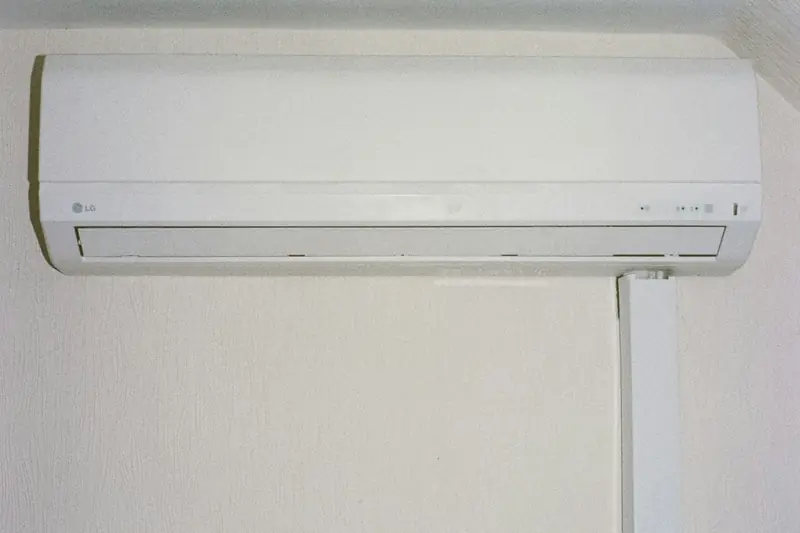
Where a ductless mini-split makes sense
A mini-split is the right choice when adding or extending ductwork would mean opening walls and ceilings, or when one area needs its own heating and cooling.
- Older homes with no ducts, heated by a wall furnace, floor furnace, or electric baseboard. A mini-split adds cooling and spreads heat more evenly than a single wall unit.
- ADUs, garage conversions, and additions. The new space gets its own system instead of overloading the main house's equipment.
- The one room that never works: a bonus room over the garage, a sunroom, or a converted attic.
- Replacing window units and space heaters. One wall unit replaces both, runs quieter, and leaves the window free.
- Home offices that need cooling during the day without running the whole-house system.
When a mini-split is the wrong fit
If the house already has decent ductwork, a ducted heat pump usually serves the whole home more evenly and costs less than putting an indoor head in every room. Houses with many small rooms that each need conditioning can get expensive with mini-splits.
Some people also don't like the look of wall-mounted heads. Ceiling cassettes and small ducted air handlers are alternatives, but they cost more.
Single-zone vs multi-zone mini-split systems
A single-zone system pairs one outdoor unit with one indoor head. A multi-zone system runs 2 to 5 or more heads from one outdoor unit. Multi-zone saves space outside, but if that outdoor unit fails, every room loses heating and cooling at once.
Separate single-zone systems cost more up front but are more forgiving. Sizing matters more with mini-splits than with central systems: a head that's too big for a small bedroom short cycles and leaves the room clammy.
How mini-split installation works
- Room-by-room load. Each zone is sized for that room's own heat gain and loss.
- Head placement and line route. Each head is placed for good airflow across the room, and the route for the refrigerant line, condensate drain, and control wire is planned. On raised-foundation houses, lines can often run through the crawlspace.
- Wall penetration. A hole about 3 inches across is cut behind each head and sealed, then the line set runs to the outdoor unit inside a paintable cover.
- Condensate. It drains by gravity where possible, and a small condensate pump is added where it can't.
- Electrical. A dedicated circuit and an outdoor disconnect.
- Connections and testing. Flare connections are torqued to specification, pressure-tested with nitrogen, and pulled into a deep vacuum before the refrigerant is released. Rushing this step causes many of the leaks mini-splits are known for.
- Setup and walkthrough. Remote and app setup, then how to clean the filters.
Signs your mini-split needs repair
- A blinking light or error code on the indoor head. Write down the pattern or code before you call.
- Water dripping from the indoor head, usually from a clogged condensate line, a dirty coil, or a drain pump that has failed.
- A musty or sour smell when it starts. Mold grows on the blower wheel inside the head, and a filter rinse won't reach it.
- Weak heating or cooling with clean filters, often a sign of a refrigerant leak at a flare fitting.
- Ice on the indoor coil or the line set.
- The outdoor unit isn't running while the indoor head blows room-temperature air.
Mini-split cleaning and maintenance
Rinse the indoor head filters every month or 2. They slide out from under the front cover. Every 1 to 2 years, have the coil and blower wheel deep-cleaned.
That means bagging the head and washing the wheel and coil in place, which removes the mold and dust buildup behind most "the mini-split smells" complaints. Keep the outdoor unit clear of plants and debris. More on seasonal care is on our HVAC maintenance page.
What affects mini-split installation cost
Mini-split cost depends mainly on the number of zones, the type of indoor unit, and how far and how hard the refrigerant lines have to run.
- Number of zones and whether they're on one outdoor unit or several.
- Indoor unit type: wall head, ceiling cassette, floor console, or concealed ducted unit.
- Line set length, number of floors, and the route (crawlspace, attic, or exterior cover).
- Wall construction: stucco, lath-and-plaster in older homes, or brick.
- Electrical: a new circuit, and a panel upgrade if there's no capacity.
- Condensate pumps where gravity drainage isn't possible.
- Permit fees.
For repairs, cost depends on the failed part (sensor, fan motor, control board, or compressor), refrigerant work, and how much cleaning the head needs.
When a mini-split problem is urgent
Call right away if the mini-split is the only heat or cooling for someone vulnerable during a cold snap or heat wave, if water is running down a wall, or if you smell burning at the head or outdoor unit. Shut it off at the breaker first. Most other mini-split problems can wait for a regular appointment.
Mini-splits for Santa Rosa's older homes and ADUs
Santa Rosa's central neighborhoods, around downtown, Railroad Square, and the city's historic preservation districts, have many pre-war houses on raised foundations. Many still rely on a wall or floor furnace and have no ducts.
Adding ducts to these houses means opening plaster walls and ceilings, and the attic often doesn't have room for a duct system. A mini-split's small refrigerant line can run through the crawlspace and up behind the indoor head, which leaves finished walls mostly untouched.
The same approach works for the ADUs and garage conversions added across Santa Rosa under California's ADU laws. A separate mini-split gives the unit its own controls and doesn't take capacity from the main house's system.
If your home is in one of Santa Rosa's preservation districts, ask the City's planning staff whether an outdoor unit visible from the street needs design review before you install. For example, Roseland has many older homes without ducts, and 2-story homes in Bennett Valley often add a mini-split to fix one hot upstairs room.
Ductless systems are one of the options we compare when we look at heating and cooling service in Santa Rosa for homes that weren't built with central air.
Ductless mini-split FAQs
Can a mini-split heat and cool a whole house?
Yes, with several indoor heads, and it works best in open floor plans or smaller homes. In houses with many closed-off rooms, a ducted heat pump or a ducted mini-split air handler often serves the house more evenly.
Do mini-splits need a permit in Santa Rosa?
Yes. Installing a mini-split is mechanical work, and it usually involves a new electrical circuit, so it needs a permit from the City of Santa Rosa.
How often should a mini-split be cleaned?
Rinse the filters every month or 2. A deep cleaning of the coil and blower wheel every 1 to 2 years keeps airflow up and prevents the musty smell that comes from mold on the wheel.
Can one outdoor unit run several rooms?
Yes. A multi-zone outdoor unit can run several indoor heads. The trade-off is that if the outdoor unit fails, every zone loses heating and cooling at the same time.
Will a mini-split work as my only heat in winter?
In Santa Rosa, yes. A mini-split is a heat pump, and current models heat efficiently at temperatures well below what Santa Rosa usually sees in winter.
Plan a ductless mini-split for your Santa Rosa home
Call HVAC Pros at (707) 283-3186 to plan a mini-split for your home, ADU, or addition, or to get an existing system working again.